Cart
0
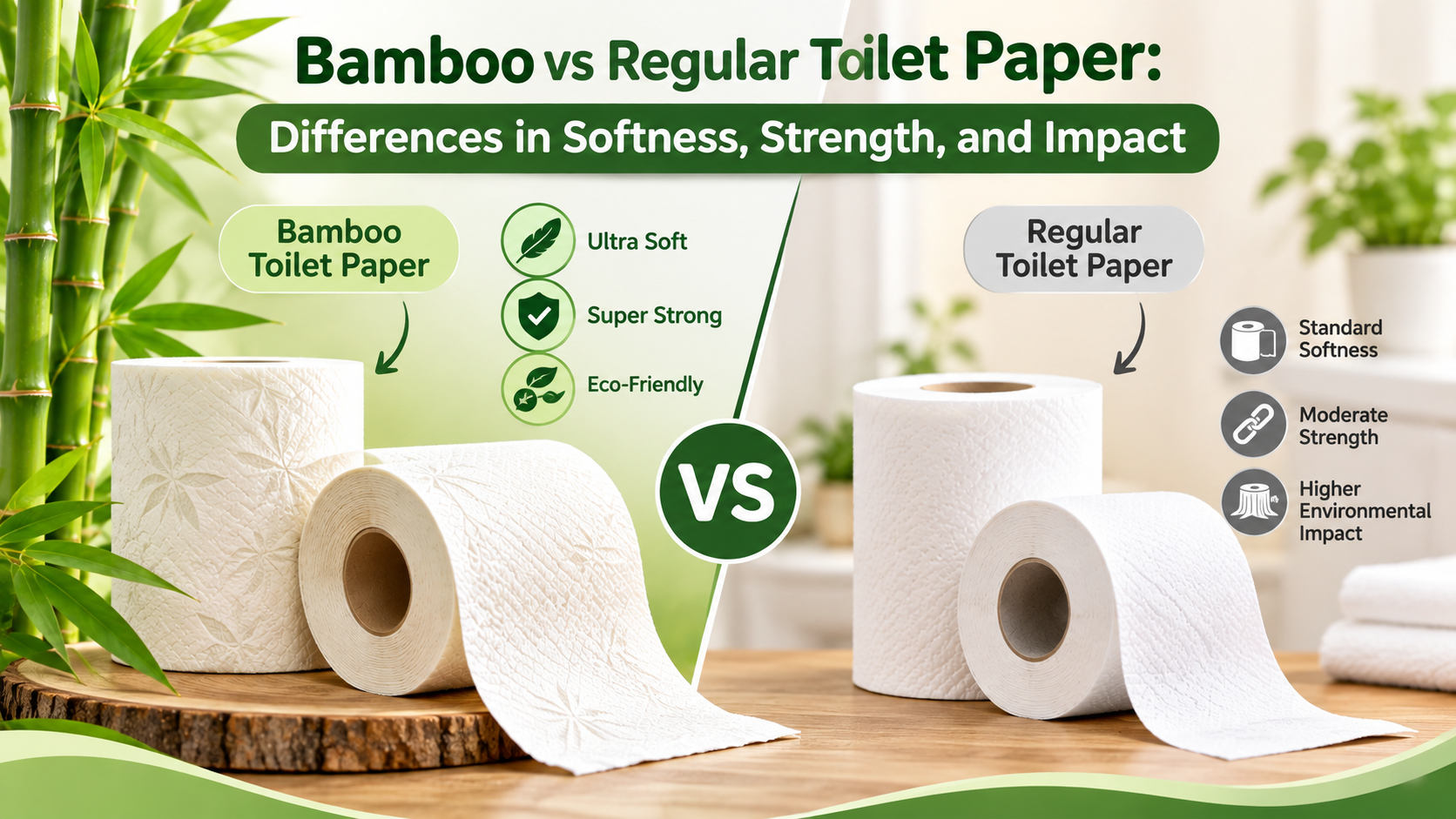
When considering bamboo vs. regular toilet paper, it comes down to this: bamboo feels softer, holds up stronger, and skips the tree-cutting guilt. But it costs more, and its green label hides a few surprises.
Did you know? According to Big Think, a single roll of regular toilet paper can soak up 37 gallons of water during manufacturing. A bamboo roll uses less than one gallon.
That gap is why so many shoppers now stare at the TP aisle like it’s a life-or-death decision. It isn’t. But your choice does matter for your skin, your plumbing, and the planet.
Key Takeaways
1. Bamboo beats regular TP on softness and strength for most users. Three-ply bamboo rolls feel smooth and resist tearing. Regular budget rolls feel rough by comparison.
2. The environmental math is messier than the label suggests. Bamboo grows fast and saves trees. But shipping and coal-powered mills can erase its carbon advantage.
3. Bamboo costs more per sheet but may last longer. Stronger paper means fewer sheets per use. That narrows the price gap.
4. Sensitive skin does better with bamboo. Most bamboo rolls skip fragrance, dyes, and harsh bleach.
5. Switching takes zero effort. Order a sample pack, test the ply count, and check for plastic-free packaging.
What Actually Separates Bamboo From Regular Rolls?
Regular toilet paper comes from trees. Manufacturers chop them, cook the wood chips with chemicals, bleach the pulp white, and press it into rolls. That process eats forests and water.
Bamboo toilet paper works differently. Bamboo is a grass, not a tree. It grows back insanely fast; up to three feet in a single day. Farmers harvest it without killing the plant. Then it goes through a similar pulping process, though many brands skip chlorine bleach.
Softness Showdown: Which One Treats Your Skin Better?
Most people imagine eco toilet paper feels like sandpaper. That myth needs to die. A well-made bamboo toilet paper roll feels genuinely soft. The fibers are naturally slender and smooth. Many brands use three plies, which adds a cushioned feel.
Regular premium toilet paper still wins the ultra-plush contest. Brands load their rolls with lotion, fragrance, and extra drying technology to create that cloud-like feel. But those extras come at a cost: more chemicals, more energy, and more irritation risk for sensitive skin.
If you have allergies or sensitive skin, bamboo often wins by default. Most bamboo rolls are fragrance-free and dye-free. That means fewer ingredients touching your most delicate areas.
Strength Test: Does Bamboo Tear or Hold?
Bamboo fibers are naturally long. Longer fibers make stronger paper. That’s the simple science behind bamboo’s durability edge.
In hands-on testing, CNN’s reviewers found bamboo rolls consistently sturdier than recycled options. They held together better and didn’t shred mid-wipe. One Walmart reviewer noted the paper is “very thick and absorbent, so you only need to use a little bit”.
Regular toilet paper varies wildly. Cheap one-ply brands tear if you look at them wrong. Premium multi-ply rolls hold up fine, but they often use chemical binders to boost wet strength. Bamboo’s strength comes from the fiber itself, not additives.
The Price Tag: Is Bamboo Toilet Paper Worth the Price?
Let’s be blunt. Bamboo toilet paper costs more per sheet than regular TP. A 24-roll box of bamboo might run $40 or more. A comparable regular pack costs $25 to $30.
But is bamboo toilet paper worth the price? If bamboo’s strength means you use 20% fewer sheets, the gap shrinks. If you factor in fewer plumbing calls from clogged pipes, the gap shrinks more. And if you care about the roughly 20% of global deforestation tied to toilet paper production, the premium starts looking like a bargain.
Budget-focused shoppers can also try recycled toilet paper. It’s usually cheaper than bamboo and keeps waste out of landfills. Just expect a slightly rougher texture.
How to Switch to Bamboo Toilet Paper Without Regret
How to switch to bamboo toilet paper is easier than you think. No plumbing modifications. No new toilet. Just a different roll.
Start with a sample pack. Don’t buy a 48-roll bulk box on day one. Order a small pack from one or two brands. Feel the texture. Test the tear strength. Your personal comfort matters more than any review.
Check the ply count. Three-ply bamboo feels dramatically softer than one-ply. If softness is your top priority, don’t cheap out on thin rolls.
Look for plastic-free packaging. Some bamboo brands wrap every single roll in plastic, defeating half the eco purpose. Paper-wrapped rolls are the real deal.
Store it normally. Bamboo toilet paper doesn’t need special handling. Keep it dry, and you’re fine.
Give your septic system a week. Most bamboo rolls break down fast in water. But flush one roll’s worth and watch. If your old pipes are finicky, test before committing.
Quick Comparison Table
Here is a quick bamboo vs regular toilet paper difference:
|
Feature |
Bamboo Toilet Paper |
Regular Toilet Paper |
|
Softness |
Smooth, improving with 3-ply |
Can be ultra-plush with lotions |
|
Strength |
Naturally strong long fibers |
Varies widely; premium holds well |
|
Water Use |
Under 1 gallon per roll |
About 37 gallons per roll |
|
Tree Use |
Zero trees |
Virgin wood pulp from forests |
|
Price |
Higher per sheet |
Lower upfront cost |
|
Chemical Load |
Often bleach-free, fragrance-free |
Bleach, dyes, fragrance common |
|
Septic Safety |
Breaks down quickly |
Varies by brand |
Take the First Step Towards a Greener Bathroom!
You don’t need to overhaul your entire bathroom. Just swap one product. Pick a bamboo toilet paper brand that uses paper wrapping and offers a trial size. Feel the difference for a week. If your skin feels calmer and your sheets hold together, you’ve found your new roll.
For a brand that checks the boxes: soft, strong, tree-free, and plastic-free, browse the options at Lovely Poo Poo.
FAQS
Q1.Is bamboo toilet paper actually softer than regular toilet paper?
Yes, for most people. Three-ply bamboo rolls feel smooth and cushioned. Premium regular TP with lotion can feel softer, but it often contains more chemicals.
Q2.Does bamboo toilet paper clog toilets?
No. Quality bamboo rolls break down in water quickly, usually within seconds. They’re safe for standard plumbing and most septic systems.
Q3.Why is bamboo toilet paper so expensive?
Bamboo fiber costs more to source and process than wood pulp. Shipping from overseas adds more. But stronger sheets mean you use less per trip.
Q4.Can I use bamboo toilet paper with a septic tank?
Yes. Most bamboo rolls are biodegradable and septic-safe. Look for brands labeled “septic safe” and avoid rolls with added lotions or fragrances.
Q5.Is bamboo toilet paper better for the environment than recycled toilet paper?
It depends. Bamboo saves trees and uses less water. Recycled paper keeps waste out of landfills. For pure carbon footprint, recycling often wins. For softness and strength, bamboo wins.