Cart
0
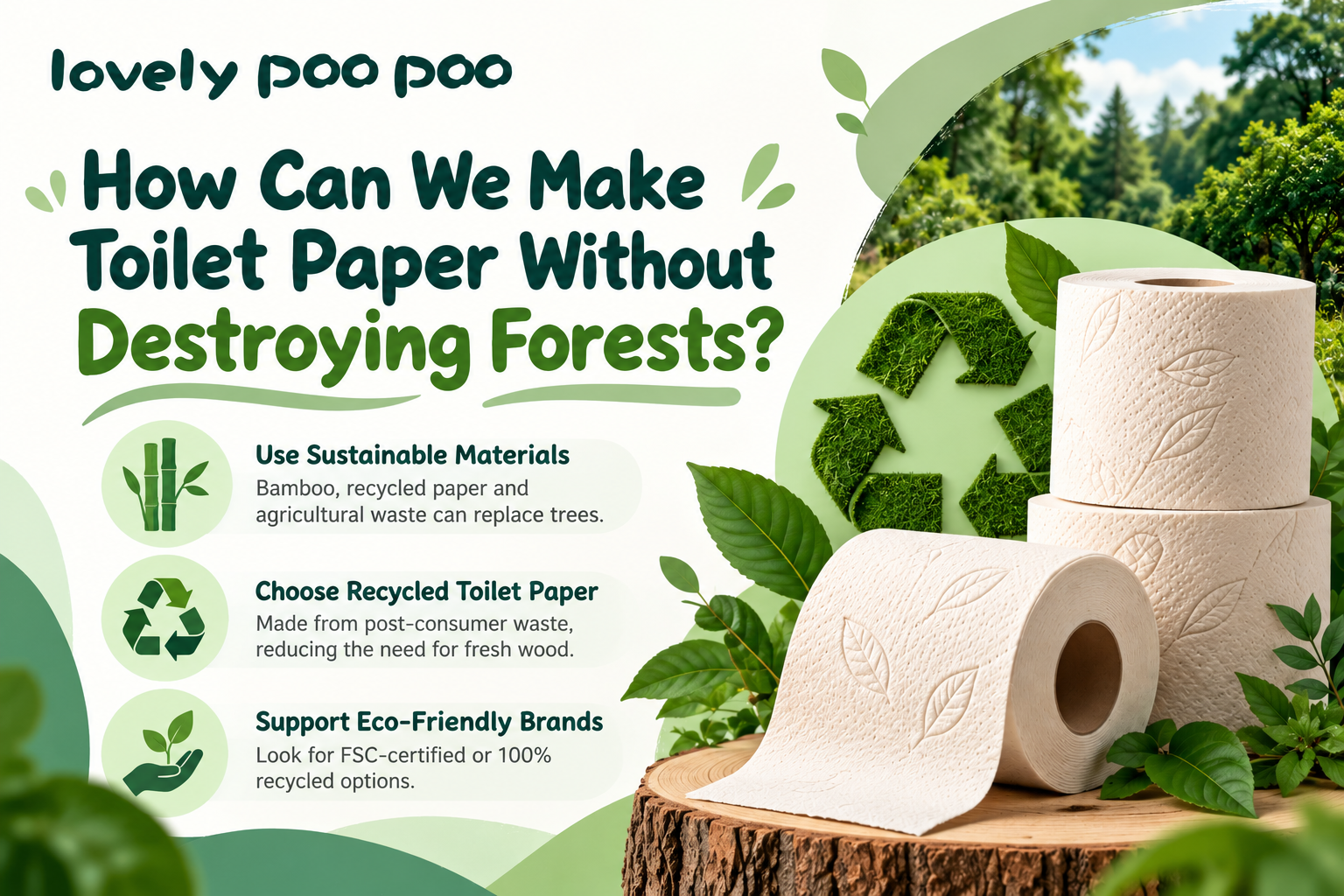
Yes, you can use sustainable toilet paper without cutting down a single tree. It all comes down to what your roll's made from, not how much of it you use.
Did you know? The Natural Resources Defense Council (NRDC) found that more than one million acres of Canada's boreal forest get clear-cut every year.
That forest holds twice as much carbon as the world's entire oil reserves. Every roll made from freshly felled trees chips away at that carbon vault a little more. You don't have to pick between comfort and conservation. Brands like Lovely Poo Poo now make soft, sturdy toilet paper out of bamboo and recycled fiber. This guide walks through how these options actually work, which one suits your bathroom, and how you can save trees.
Key Takeaways
-
Wood toilet paper drives large-scale forest loss every year, mainly through logging in carbon-rich boreal regions.
-
Bamboo regrows fast from its own roots, so harvesting it never means replanting or clearing new land.
-
Recycled toilet paper uses the least water and energy per roll since it skips raw fiber sourcing entirely.
-
FSC certification confirms real, verified sustainable sourcing, so you're not relying on vague marketing claims alone.
-
Small switches at checkout add up fast, saving hundreds of thousands of trees when enough households join in.
Why Regular Toilet Paper Costs the Planet So Much
Most toilet paper starts life as a tree. Loggers cut it down, mills pulp it, and bleach turns it white. Each step eats up energy and water along the way.
The average American goes through three rolls of toilet paper a week. That habit alone drives a huge slice of global tissue demand. Multiply it across millions of households, and the numbers get ugly fast.
Virgin tissue production also guzzles far more water than recycled alternatives do. Bleaching dumps chemicals into rivers near paper mills. And every acre of forest lost chips away at the planet's ability to soak up carbon dioxide.
Common mistakes shoppers tend to make:
-
Trusting a green-looking package without checking the actual fiber source
-
Assuming "recyclable" packaging means the paper inside is eco-friendly too
-
Skipping past certification labels like FSC (Forest Stewardship Council) entirely
Eco Alternatives That Actually Work
You don't need to overhaul your whole bathroom routine. Just switch what's on the roll. Here are the main eco alternatives worth knowing about.

Bamboo Toilet Paper: The Fast-Growing Fix
Bamboo isn't a tree; it's a grass, and it grows shockingly fast; some species shoot up nearly three feet in a single day. Farmers harvest it without killing the plant since it grows back from its own root system this is exactly why bamboo is more sustainable than trees.
Bamboo also pulls in more carbon dioxide than an equivalent patch of trees while it's growing. That's what makes it a renewable resource in the truest sense of the word, and one of the best ways to combat deforestation.
Recycled Toilet Paper: The Waste-Reducer
Recycled toilet paper gives old paper a second life instead of letting it rot in a landfill. It skips the tree-cutting step altogether.
Making recycled tissue burns noticeably less energy and water than starting from raw wood pulp. It's usually the most water-efficient pick on the shelf.
Tree-Free and Agricultural Waste Paper
A handful of brands now make tissue out of sugarcane pulp, wheat straw, or hemp. These are farming leftovers that would otherwise get burned or tossed. Turning them into paper gives that waste a second act.
Bamboo vs Wood TP: Which One Should You Buy?
The bamboo vs wood TP question really boils down to renewability versus resource use. Wood pulp comes from forests that take decades to grow back. Bamboo bounces back in just a few years and never needs replanting. For a closer look at how it also stacks up against recycled fiber, see bamboo toilet paper vs recycled toilet paper.
Here's a quick side-by-side to make the choice easier:
| Factor | Virgin Wood TP | Bamboo TP | Recycled TP |
|---|---|---|---|
| Tree impact | High (direct logging) | None | None |
| Regrowth time | 20-80 years | 3-5 years | N/A (reused fiber) |
| Water use per roll | Highest | Moderate | Lowest |
| Carbon footprint | Highest | Low to moderate | Low |
| Chemical bleaching | Common | Sometimes | Sometimes (de-inking) |
| Softness | Soft | Soft to very soft | Slightly coarser |
Note: Exact figures shift depending on brand, process, and which lab study you're reading.
Recycled paper tends to win on water and energy per roll. Bamboo takes the crown on land use and how fast it regrows. Either way, both beat virgin wood paper on nearly every measure that counts.
Compostable Bathroom Products: Beyond the Roll
Toilet paper isn't the only bathroom item worth a second look. Compostable bathroom products now stretch across tissues, wipes, and even packaging.
A few swaps worth trying on your next shopping trip:
-
Plastic-free wrapping: Plastic-free wrapping: Paper bands instead of plastic film see why plastic-free packaging matters
-
Unbleached tissue: Skips the chlorine bleaching step
-
Compostable wet wipes: Break down instead of clogging pipes
-
Recycled cardboard cores: Even the tube's made from waste paper
Pro tip: Check whether a product's certified compostable, not just labeled biodegradable. The two words sound alike but mean very different things once it hits a landfill.
What "FSC Certified" Actually Means
The FSC label tells you a company follows real sustainable forestry standards. Certified suppliers replant what they cut and leave old-growth zones alone.
Not every green claim on a package actually holds up. An FSC stamp gives you something to verify instead of just trusting the marketing copy.
Look for third-party certification marks first, then check the fiber source printed on the pack. That two-step habit weeds out most greenwashing in seconds.
How Small Swaps Add Up
One household switching brands feels like a drop in the bucket. But scale changes the whole picture.
Greenpeace estimates that if every American family bought just one roll of recycled toilet paper, it could save trees by the hundreds of thousands. Multiply that across millions of shoppers and forests get a real break.
Small, repeated choices at checkout carry more weight than most people give them credit for.

Upgrade Your Bathroom Routine Today!
Sustainable toilet paper isn't some passing trend. It's a simple fix for a problem hiding in plain sight, right there in your bathroom cabinet. Every roll made from bamboo, recycled fiber, or farm waste leaves a few more trees standing and a little more carbon locked away.
Start small by buying just one eco-friendly pack on your next trip. Always check the label for recycled materials or FSC certification before you pay. Visit Lovely Poo Poo to learn more about simple green bathroom habits.
FAQs
1. Is bamboo toilet paper better than regular toilet paper?
Yes. Bamboo grows faster than trees, regenerates from its own roots, and absorbs more carbon while growing, which makes it far more renewable than virgin wood pulp.
2. Does recycled toilet paper feel rougher than regular paper?
Some brands feel a touch less plush, but modern recycled tissue has come a long way. Plenty of shoppers can't even tell the difference day to day.
3. Is bamboo toilet paper septic-safe?
Yes, most bamboo toilet paper breaks down just as fast as, or faster than, regular paper, so it's safe for septic systems and older plumbing.
4. What does FSC certified mean on toilet paper packaging?
It means the Forest Stewardship Council verified that the wood or fiber source follows responsible forestry practices, including replanting and habitat protection.
5. Is bamboo toilet paper more expensive than regular toilet paper?
It often runs a bit pricier because of import and processing costs, but prices have dropped as demand and competition have grown.